
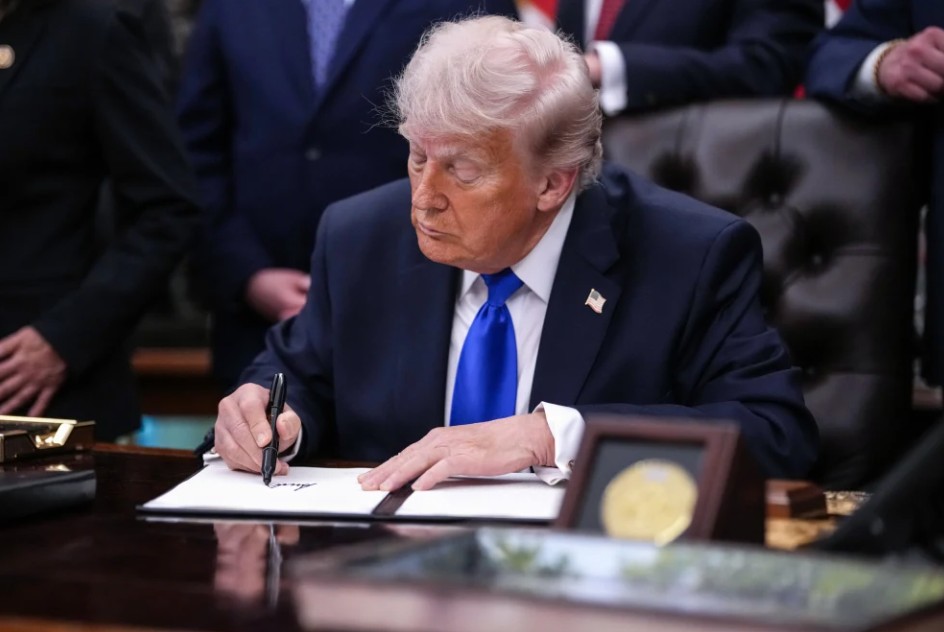

Trump Signs Executive Order Expanding Workers’ Access to Retirement Plans, marking a major shift in how millions of Americans may prepare for retirement. Millions of American workers are still walking into their future without a safety net. No 401(k). No employer matches. No structured retirement plan at all.
On April 30, 2026, President Donald Trump signed an executive order designed to change that reality by expanding access to retirement savings options for workers across the United States, especially those in jobs that traditionally do not offer retirement benefits.
The move focuses on making Individual Retirement Accounts (IRAs) easier to access, simpler to understand, and more widely used through a centralized federal system and potential financial incentives.
Learn more about retirement savings rules from the IRS:
https://www.irs.gov/retirement-plans/individual-retirement-arrangements-iras
What the Executive Order Actually Does
At its core, the executive order aims to remove barriers that prevent workers from saving for retirement.
Key components include:
- Creation of a centralized digital platform, commonly referred to as TrumpIRA.gov
- Simplified access for workers who do not have employer sponsored retirement plans
- Direct connections to approved private financial institutions offering IRA products
- A comparison style system to help users select low-cost retirement accounts
- Efforts to streamline enrollment and reduce paperwork friction
The focus is clear: make retirement saving something that does not require HR departments or financial literacy expertise to begin.
Human impact:
This policy is primarily aimed at gig workers, freelancers, part time employees, and small business staff people who often fall outside traditional benefit systems.
Official retirement framework background:
https://www.dol.gov/general/topic/retirement
Who Benefits from This Policy
The retirement access expansion under the executive order is designed to address specific gaps in the U.S. financial system rather than applying uniformly to all workers. It is expected to primarily benefit individuals who currently lack structured retirement options, including workers without access to employer sponsored plans such as 401(k)s, as well as low- and middle-income earners who may face barriers to long term savings. Self-employed professionals and participants in the gig economy such as delivery drivers, freelancers, and independent contractors are also key target groups, given their limited access to traditional benefits. Additionally, employees working in small businesses that do not offer retirement programs stand to gain from this initiative. According to widely cited policy estimates in financial reports, more than 50 to 56 million Americans currently do not have access to employer sponsored retirement plans, highlighting the scale of the gap this executive order aims to address.
Background on retirement coverage trends:
https://www.pewresearch.org/social-trends/retirement/
The $1,000 Federal Retirement Match Explained
A key feature of this initiative is the proposed federal matching contribution.
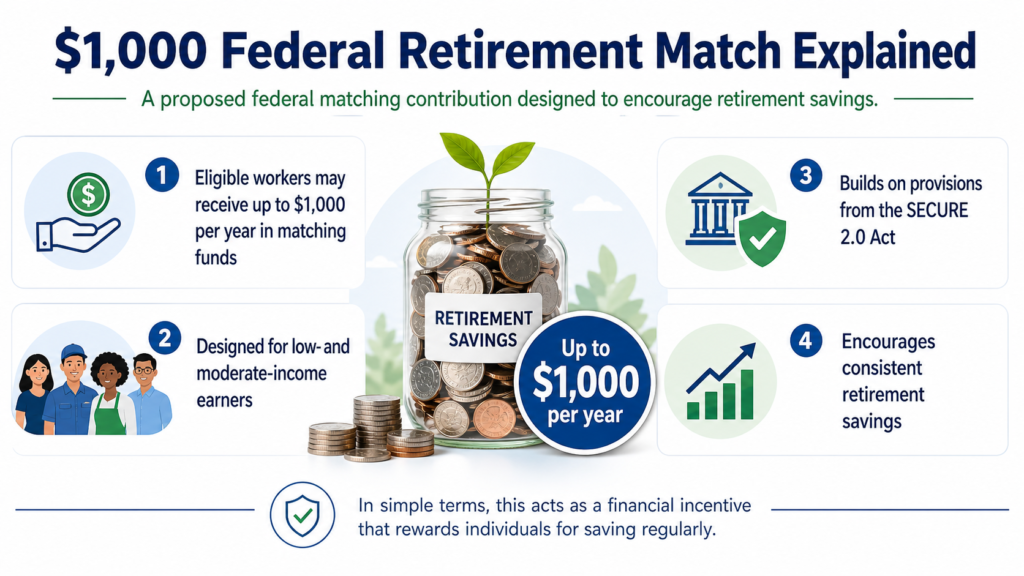
- Eligible workers may receive up to $1,000 per year in matching funds
- The benefit is designed for low- and moderate-income earners
- It builds on provisions from the SECURE 2.0 Act
- The goal is to encourage consistent retirement savings
Learn more about SECURE 2.0 Act:
https://www.congress.gov/bill/117th-congress/house-bill/2617
In simple terms, this acts as a financial incentive that rewards individuals for saving regularly.
What Is TrumpIRA.gov
A central element of the policy is the proposed federal retirement platform, TrumpIRA.gov. The initiative aims to create a single, user-friendly portal where individuals can easily explore and open retirement accounts. Through this platform, users are expected to benefit from centralized IRA enrollment, along with integrated tools that allow for easy comparison of different retirement plans. It would also provide access to private financial service providers, streamlining the process of selecting suitable options. Additionally, the platform is designed to simplify onboarding for new users, making retirement planning more accessible to a broader population. The rollout is anticipated to occur in phases, with an initial launch potentially beginning in 2027.
Federal retirement system reference:
https://www.tsp.gov/
Why This Executive Order Matters
This policy addresses one of the most persistent financial challenges in the United States, namely unequal access to retirement savings. For decades, retirement planning has been closely tied to employment type, with workers in traditional jobs often receiving structured benefits while others are left to manage their savings independently. The initiative seeks to expand financial inclusion by making retirement tools more accessible, encourage long-term saving habits across a broader population, reduce reliance on employer-based benefit systems, and provide greater support for nontraditional workers. In real world terms, this issue is particularly significant because many Americans rely on Social Security as their primary source of income during retirement, underscoring the need for more diversified and accessible savings options.
Social Security information:
https://www.ssa.gov/retirement
Criticism and Concerns
Despite its potential, the policy has raised several concerns among experts.
Key issues include:
- Lack of automatic enrollment
- Uncertainty around participation rates
- Questions about long-term funding for matching contributions
- Debate over whether deeper pension reform is needed
Independent retirement policy analysis:
https://www.brookings.edu/topic/retirement/
How It Compares to Existing Retirement Plans
To understand the impact, it helps to compare this initiative with existing retirement systems.
401(k) Plans
- Employer-sponsored
- Automatic payroll deductions
- Often include employer matching
IRS overview: https://www.irs.gov/retirement-plans/401k-plans
Traditional IRAs
- Individually managed
- Require self-enrollment
- No employer involvement
Proposed Federal Platform
- Centralized access
- Simplified enrollment
- Potential federal incentives
- Designed for broader accessibility
The key difference is ease of access and reduced complexity.
What Happens Next
Following the issuance of the executive order, the policy will move into a multi-phase implementation process aimed at gradually building and deploying the proposed retirement framework. Initial efforts are expected to focus on platform development and testing to ensure functionality and user accessibility, alongside coordination with financial institutions to integrate services and offerings. The rollout is anticipated to occur in stages, with early deployment potentially beginning around 2027, allowing time for refinement and scalability. Over the longer term, the initiative could be expanded and strengthened through future legislative action, depending on its performance and policy priorities.
U.S. Treasury information:
https://home.treasury.gov/
The Trump Signs Executive Order Expanding Workers’ Access to Retirement Plans represents a major shift in U.S. retirement policy focused on expanding access to savings tools. Rather than replacing existing systems, it aims to expand access and provide new tools for workers who have historically been left out of employer-based plans.
Its long-term success will depend on adoption, funding, and execution. However, it clearly signals a growing focus on making retirement savings more accessible to all Americans.
Read More: Spirit Airlines Collapse After Failed Rescue Deal Ends Operations
